

How to Choose the Right Sparkling Water Machine for Your Brand
Choosing the right sparkling water machines is an important decision for small‑appliance brands looking to expand their product range, enter a new category, or improve their existing product portfolio. Different business situations call for different product strategies.
Some brands need a new model that complements their current range, while others want to test the market with limited complexity. For brands facing cost pressures or excess inventory, reassessing the product assortment may be a more practical starting point.
Rather than looking for a universally “best” model, brands should identify their current needs and choose a product that supports their business goals.
Sparkling Water Machine for Home Use: Strategies to Expand Your Product Line
For brands that already sell soda makers, expanding the product line is not simply about adding more SKUs. Each new model should serve a clear purpose and offer something the existing range does not.
Risk note: Adding new SKUs will introduce additional costs for packaging, certification and inventory planning. Evaluate your supply‑chain capacity before launching extra product variants.
Add a Premium Option to Your Product Range
If your current range mainly targets the mass market, introducing a premium option may help you reach a different customer segment. Consider how the product’s design, materials, surface finishes, and functionality can support a higher‑end position.
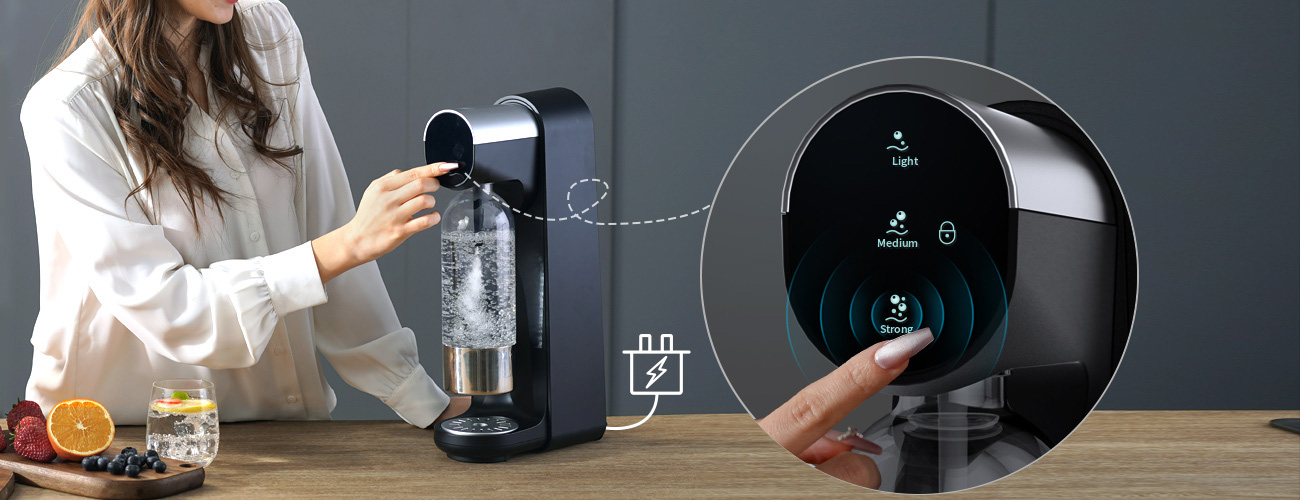
Take the HR‑198 as an example. Compared with a basic manual soda maker, it offers a more advanced experience through electric operation and a smart LCD touch interface. These features can help brands develop a premium offering that emphasizes convenience, modern technology, and a more sophisticated user experience.
When choosing a premium sparkling water machine, look beyond appearance alone. Consider whether smarter controls, electric operation, and an advanced user interface match your target customers’ expectations and brand positioning. The goal is to offer a noticeably different experience that gives your premium range a clear reason to exist.
Introduce More Distinctive Functionality
Another approach is to add functionality that distinguishes a new model from your current range. For example, if your existing products mainly carbonate water, consider a model designed to carbonate other suitable beverages.
The HR‑170 illustrates this direction. Its bottom‑inflation structure, foldable base, and ability to carbonate suitable drinks beyond water provide several points of differentiation. Such a model may help a brand broaden its offering without repeating the same product concept.
Improve Convenience or Offer an Alternative Design
Product‑line expansion can also focus on user experience or operating method rather than adding more functions.
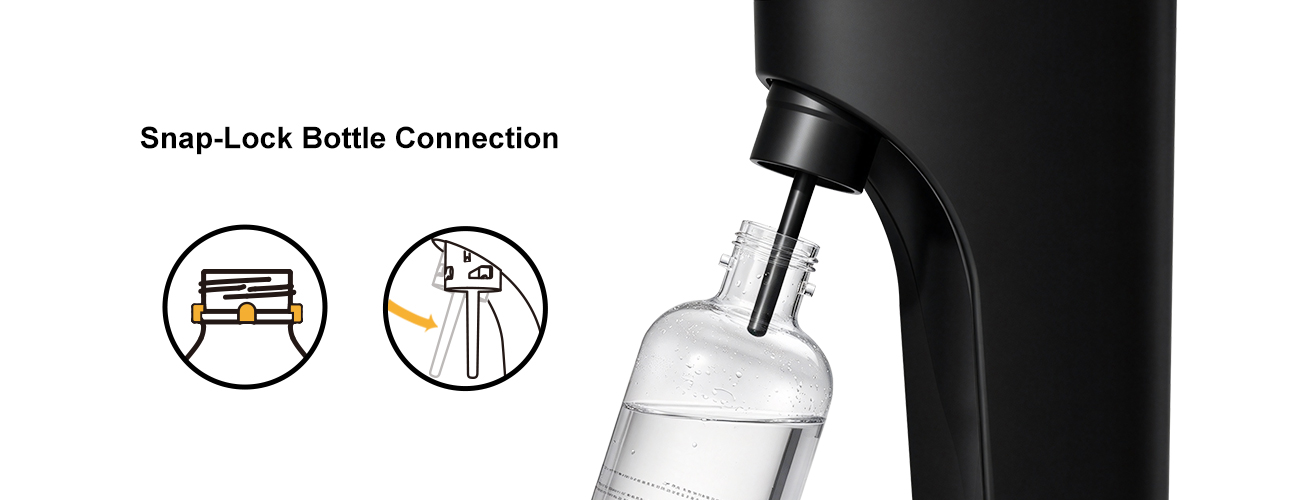
For example, the HR‑155 features a Snap‑Lock bottle connection, offering a different approach to bottle installation. If your existing range relies mainly on electric models that require a power outlet, a manual, non‑electric option such as the HR‑209 could provide another direction for your portfolio.
The key is to identify a genuine gap in your range. A new sparkling water machines should have a clear role rather than compete unnecessarily with products you already sell.
Sparkling Water Machines: Low‑Risk Strategies for Category Entry
For small‑appliance brands entering the soda maker category for the first time, the main challenge is balancing market opportunity with the uncertainty of launching an unfamiliar product.
Risk note: Entry‑level models face fierce market price competition. A basic configuration does not guarantee healthy profit margins for your brand.
Starting with a suitable basic model can be a practical way to test demand. A simpler configuration may reduce the number of functions and product decisions to evaluate at the beginning. This is a product‑planning strategy, not a guarantee that every basic model will cost less.
Once the initial direction is established, brands can consider two ways to create a competitive position: pricing and appearance.
Differentiate Through Pricing or Value
For brands targeting price‑sensitive markets, procurement cost plays an important role in setting retail prices and potential margins.
The HR‑186 can serve as an example when evaluating a cost‑conscious product option. If its factory purchase cost fits the brand’s target price, the brand may have more flexibility to offer a competitive retail price or maintain a reasonable margin.
The decision should consider the overall business model, not purchase cost alone. The goal is to find a product configuration that fits the intended market and pricing strategy.
Choose an Appearance That Fits Your Brand
Price is not the only way to stand out. Appearance can help a new product establish a recognizable identity, particularly when the core functions of entry‑level soda makers are broadly similar.
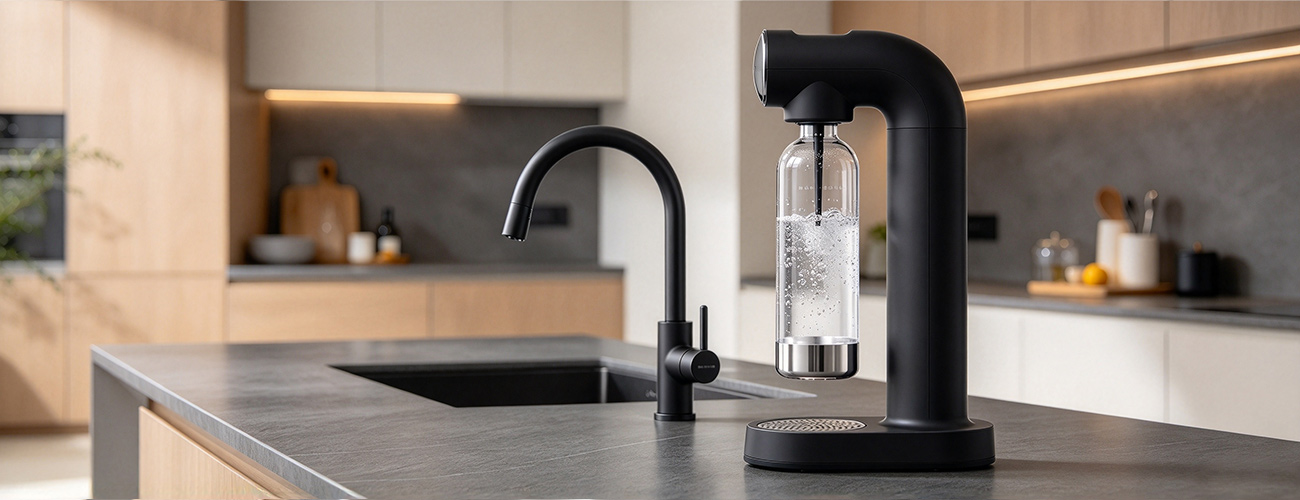
The HR‑191, with its textured body, offers one design direction. The HR‑177, with its faucet‑inspired appearance, illustrates another.
Visual difference should serve a purpose. A distinctive design is most useful when it aligns with the brand’s style and appeals to its intended customers. Choosing an unusual product simply because it looks different may not create a coherent product offering.
For new entrants, the aim is not necessarily to launch the most feature‑rich model. A suitable basic model, supported by a clear pricing or design strategy, can provide a focused starting point.
Sparkling Water Machine for Home: Optimize Cost & Inventory Efficiency
Brands that already sell related products may face a different challenge. Cost pressures, slow‑moving inventory, or an assortment that no longer matches market demand can make product selection more complicated.
In this situation, adding another model is not always the best response. First, reassess the existing product range and identify where adjustments may be needed.
Reassess Your Current Product Assortment
If inventory is moving slowly, consider whether current models match the needs and preferences of the target market. If cost is the main concern, review product positioning and configuration before deciding whether a new model is necessary.
The objective is to build an assortment that better reflects actual demand, rather than adding SKUs without a clear reason.
Consider a More Compact Product Design
A compact design may be worth considering when product dimensions matter to the target market or sales channel.
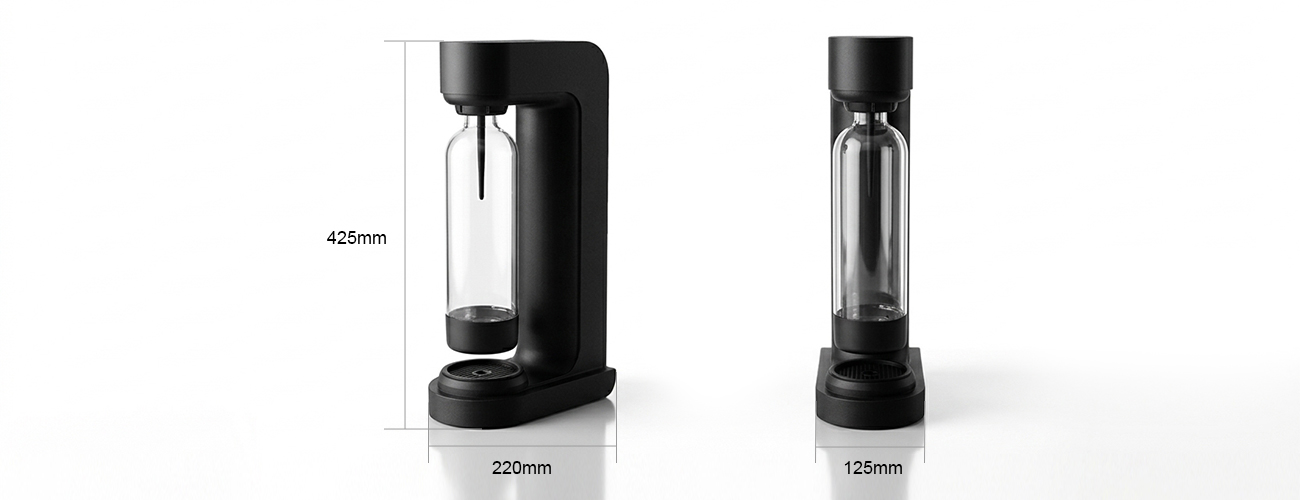
The HR‑193, measuring 220 × 125 × 425 mm, is one example of a compact‑format sparkling water machines. Its dimensions provide a reference point for brands evaluating products with a smaller footprint.
Whether a compact model is appropriate depends on the target market and its role in the existing range. Its dimensions alone do not guarantee lower storage or shipping costs, so these factors should be assessed separately.
Reassessing the product range also involves finding a new supplier, our How to Source the Best Sparkling Water Maker for Home provides further guidance on sourcing.
Conclusion
Choosing a sparkling water machines depends on your brand’s specific business needs. The table below summarizes the three scenarios and provides a quick reference for product selection.
| Your Brand’s Situation | Recommended Product Strategy | Key Consideration |
|---|---|---|
| Expanding an existing product line | Add a model that fills a gap in the current range | Product differentiation |
| Entering the soda maker category | Start with a suitable basic model and differentiate through price or appearance | Market‑entry risk |
| Managing costs or excess inventory | Reassess the product assortment and consider compact models | Cost and inventory efficiency |
Every brand faces different challenges, so the right product strategy should be based on its circumstances and goals.
Due to space limitations, this series will continue with two more articles exploring these scenarios in greater detail: product planning for specialist soda maker brands looking to strengthen their market positioning, and product selection for large retailers developing private‑label ranges. These articles will be coming soon, so stay tuned!
Need support for your product‑selection project? Request our model comparison matrix, brand‑oriented product suggestions and OEM program details. Reach out to our team to discuss your sparkling water machine sourcing requirements.