

Why a Carbonated Water Machine Office Channel Compounds Faster
Most distributors treat the office as a secondary market — somewhere to place leftover stock once the home channel is covered. The arithmetic says otherwise. A home unit runs one or two cycles a day. An office unit runs dozens. Same machine, same margin structure, a completely different repeat rate on the only part that recurs: the cylinder.
Office Carbonated Water Machine vs Home Unit: What the Consumption Gap Looks Like
| Dimension | Home | Office |
|---|---|---|
| Cycles per day | 1–2 | Dozens |
| Users per machine | One, trained | Many, untrained |
| Maintenance | Owner cleans | Effectively none |
| Space | Kitchen counter | Desk edge, pantry corner |
| Cylinder turnover | Months | Weeks |
| Buyer | The user | Facilities or office manager |
The gap is not only volume. It changes what the machine has to survive. It is also why a carbonated water machine for office use reaches in one week what a home unit accumulates over months. You stop pricing office units as a home SKU with a different sticker.
Three Commercial Advantages of a Carbonated Water Machine for Office Channels
Three things separate an office carbonated water machine from a home unit commercially.
- It sells into accounts you already have. An office supplies customer already buys coffee, water and cleaning products. This is a new line into an existing wallet — no new lead generation, no new credit check, no new relationship to build.
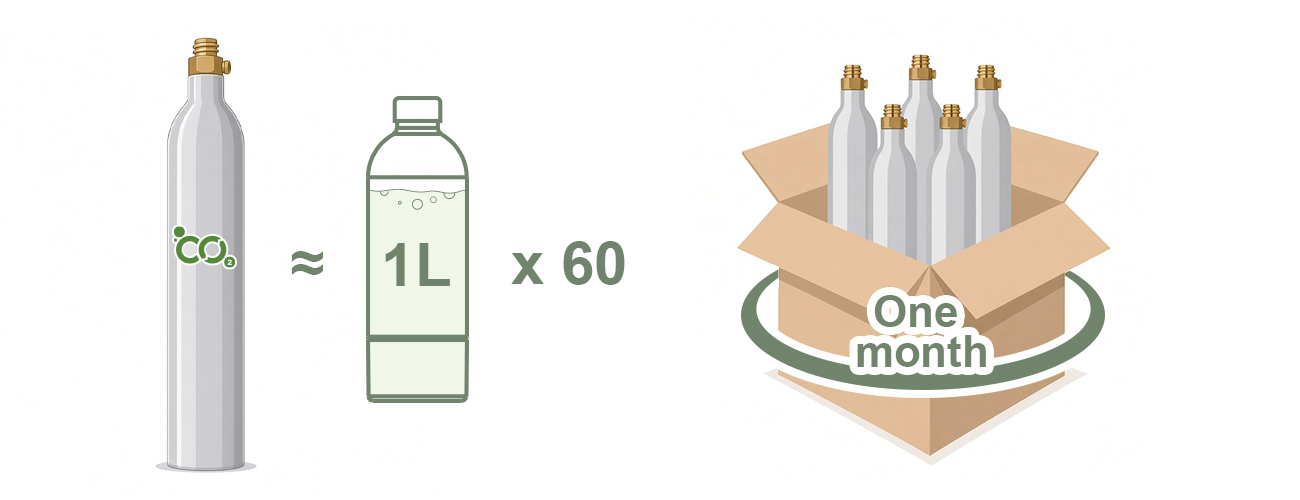
- The machine is the entry; the cylinder is the compounding part. Same structure as printers and cartridges. A home user changes a cylinder every few months. A carbonated water machine shared across a floor turns cylinders over far faster, because the cost is split across everyone who uses it and nobody is monitoring consumption.
- It is the cheapest brand trial an appliance maker can buy. Staff meet the product at work, then look for it at retail. Most brands pay for that exposure.
A category that grows from accounts you already service instead of from ad spend.
Selection Criteria for a Carbonated Water Machine Office Floors Can Actually Use
Three physical constraints settle the model before any feature list does.
- Power. A commercial carbonated water dispenser sited away from services has to run without power. Many pantries have no spare outlet at all.
- Depth. Depth, not width, is the real constraint — 30 cm of projection blocks a tray or a kettle.
- Volume per cycle. A 0.5 L bottle means carbonating twice for a small group. A 1 L bottle covers a short queue.
Positioning an Office Carbonated Water Machine in Your Catalogue Range
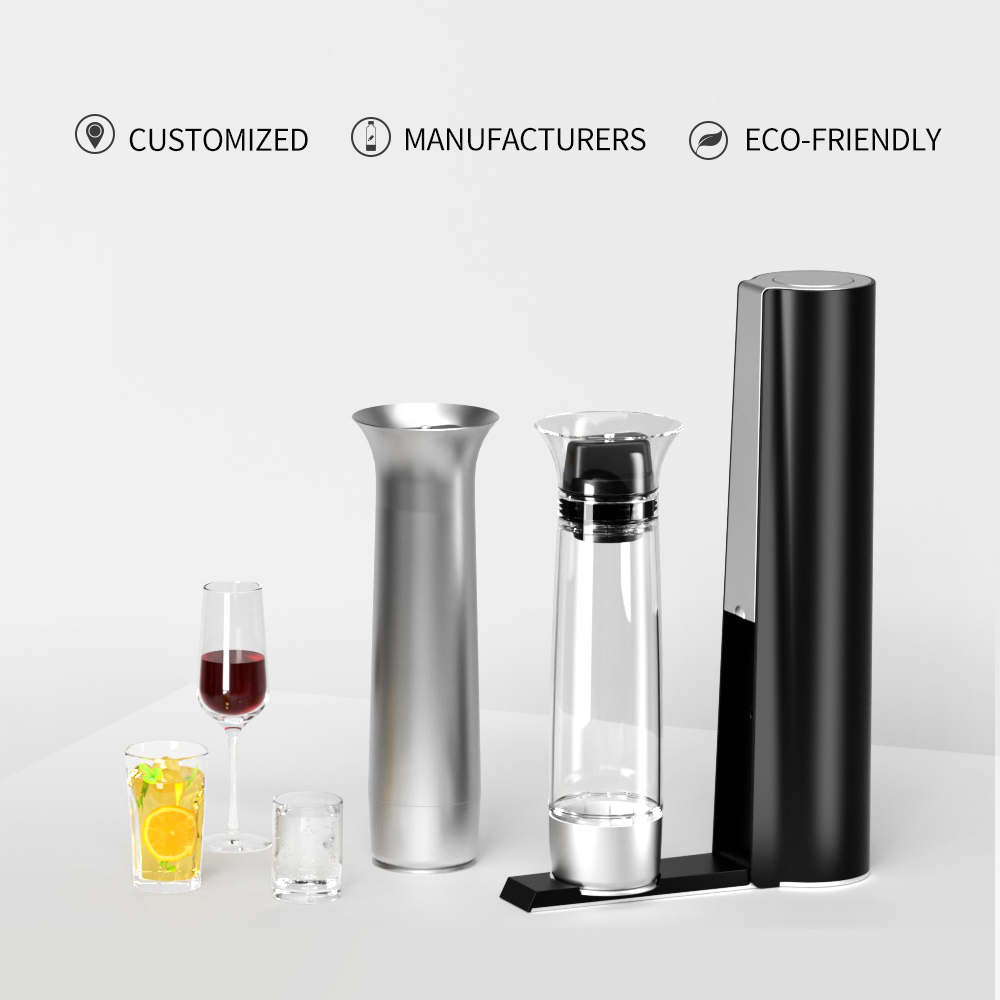
One electric and one non‑electric unit covers pantries with power, desks without it, and a sparkling water machine for the staff kitchen as a second placement once the first proves itself.
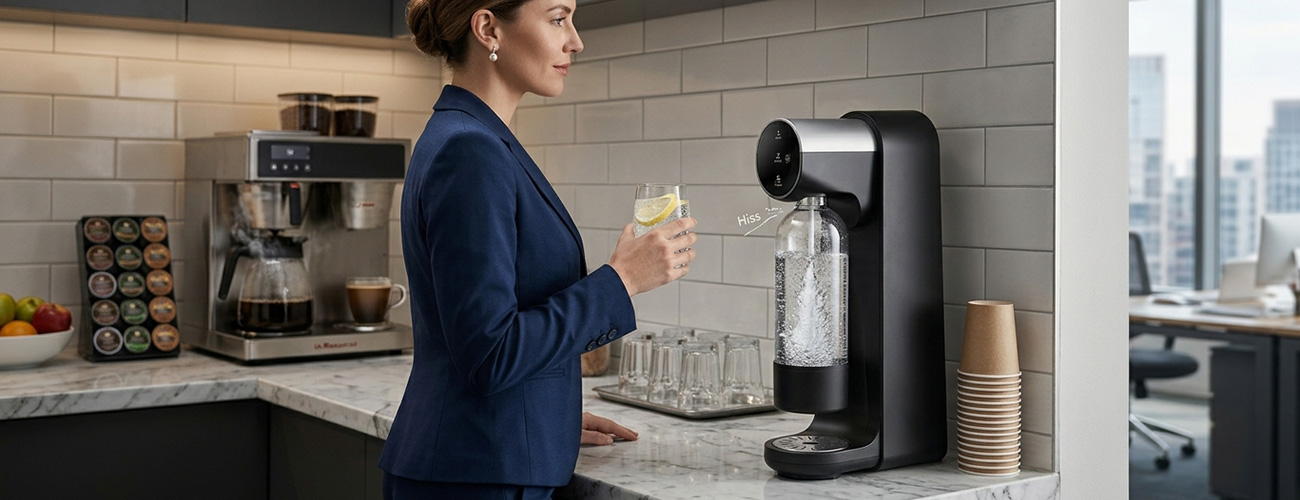
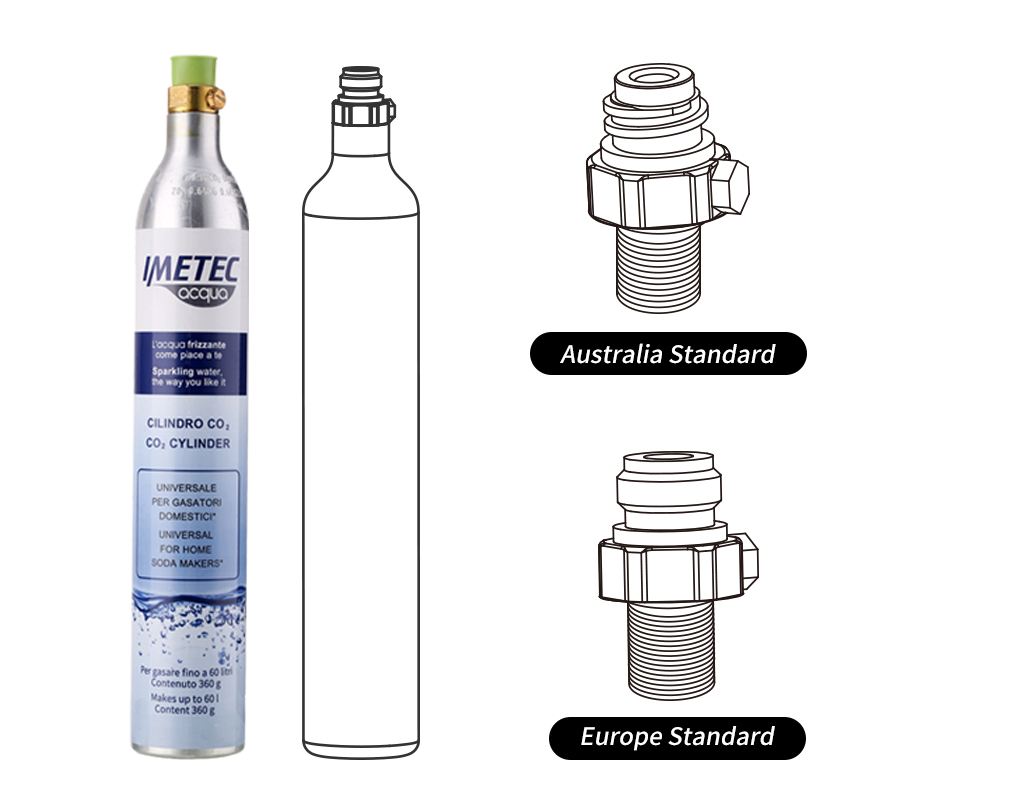
- Cylinders. Ship cylinders with the machines; office replenishment runs shorter than domestic.
- Branding. Office channels often want neutral packaging or their own label — both available, with carton customization and silkscreen logo.
- Message. Sell the mid‑afternoon moment and the end of bottled water deliveries. Do not sell health.
HR‑170: A Carbonated Water Machine Office Staff Can Use Without Training
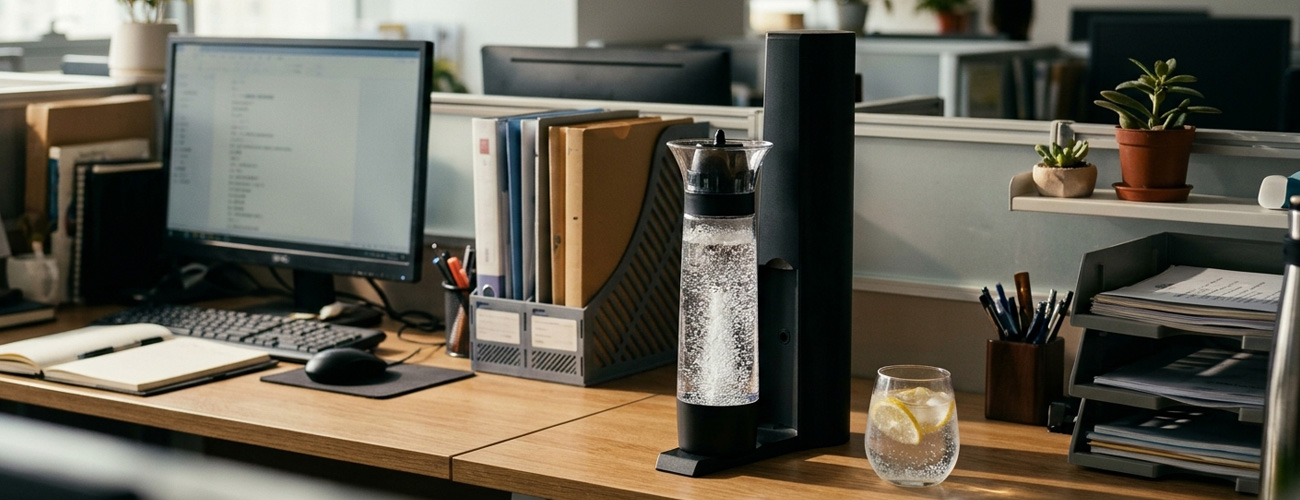
As a carbonated water machine office staff share, the HR‑170 measures 285 × 97 × 430 mm. Ninety‑seven millimetres of depth sits at a workstation edge or in a pantry gap, and the base folds flat.
That compactness is the least interesting thing about it. The gas path is the argument:
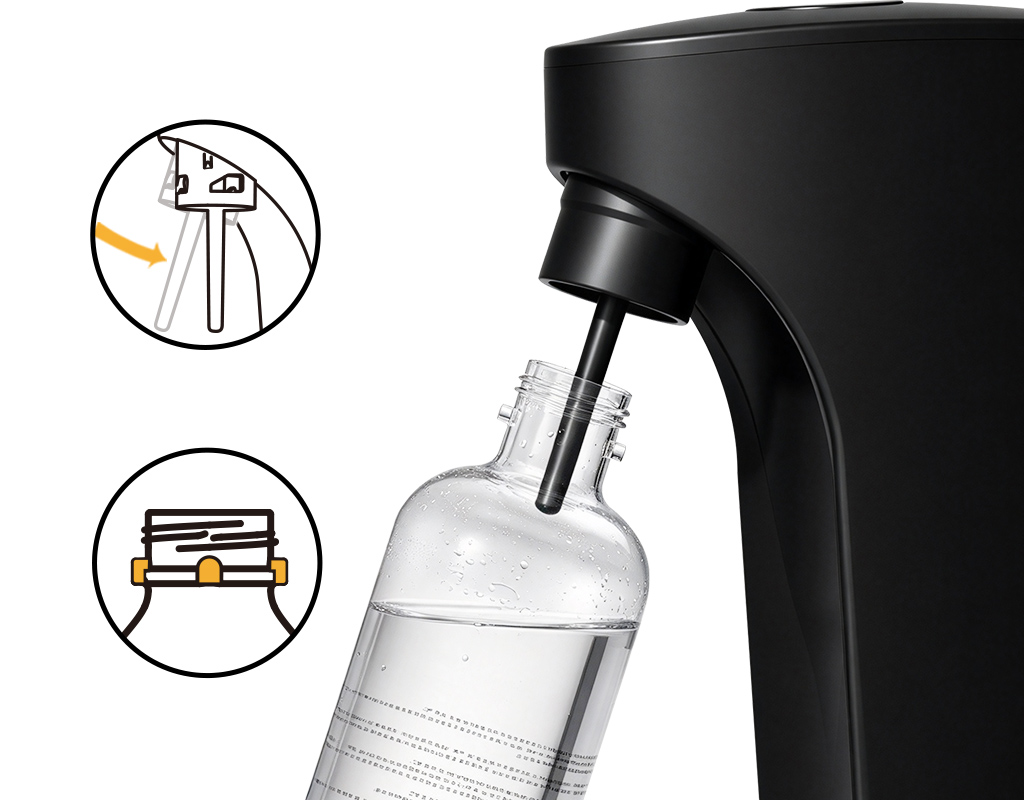
Gas enters at the bottom of the bottle and dissolves upward — more complete carbonation, no overflow, less gas wasted per press. It carbonates more than water — coffee, juice and tea included.
No electrical connection, a 900 ml bottle, a mechanical button.
HR‑198: One‑Touch Office Carbonated Water Machine with Three Fizz Levels
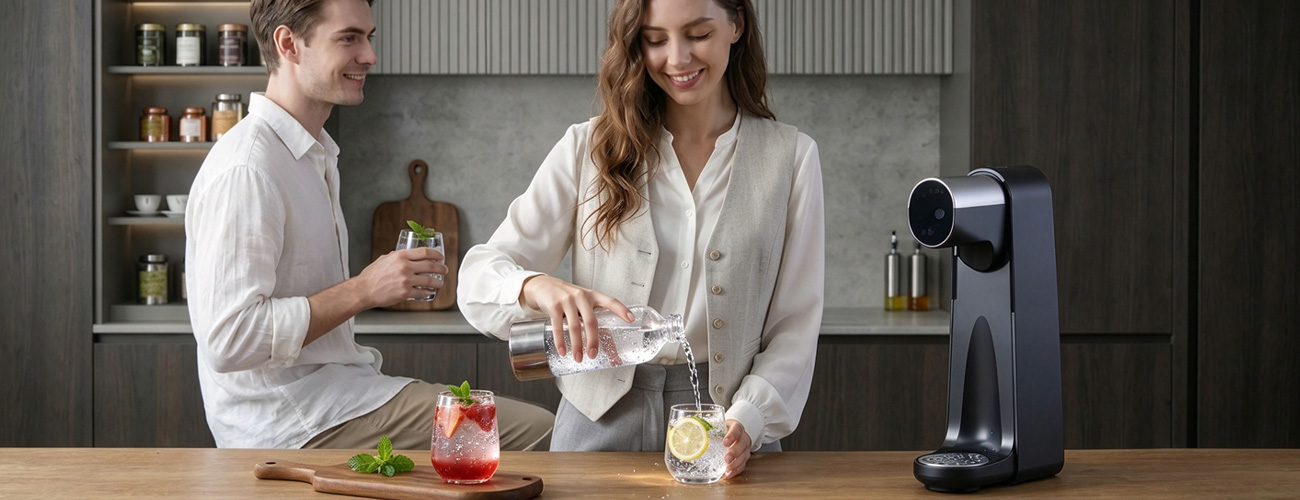
The HR‑198 is the pantry unit — an office carbonated water machine built for one‑press operation. An LCD panel offers light, medium and strong carbonation — each person picks a level and the machine finishes on one press, with no holding a button and judging by sound.
A 1 L bottle gives roughly three 250 ml servings, covering two to three people drawing at once. A child lock prevents accidental operation in a shared space.
Voltage is configurable: the standard build is 220–240 V and it can be set for the North American market on request. Certifications are CE, LFGB, UL and FCC.
FAQ
- Why start with offices instead of home retail?
- A cylinder sold into an office turns over faster, and the cost is shared across users, so the recurring line compounds from an account you already hold.
- Which model should I lead with?
- The HR‑198 where the pantry has power. The HR‑170 where it does not, or where the placement is a desk edge.
- Does either need a power outlet?
- Only the HR‑198. The HR‑170 runs on gas.
- Can the HR‑170 carbonate coffee or juice?
- Yes. Bottom injection carbonates coffee, juice and tea, not only water.
- Can the HR‑198 run on North American voltage?
- Yes, it can be configured for that market on request.
Looking to expand your offering? Contact our team to discuss your B2B carbonated water machine project today.